The Girl They Didn’t See Coming
Five days before the largest amphibious invasion in human history, Allied planners faced a quiet but terrifying reality.
The men they had sent before were gone.
Each had been trained, briefed, and parachuted into Nazi-occupied France with the same mission: gather intelligence, transmit it to London, and disappear before German counterintelligence could close in.
None had returned.
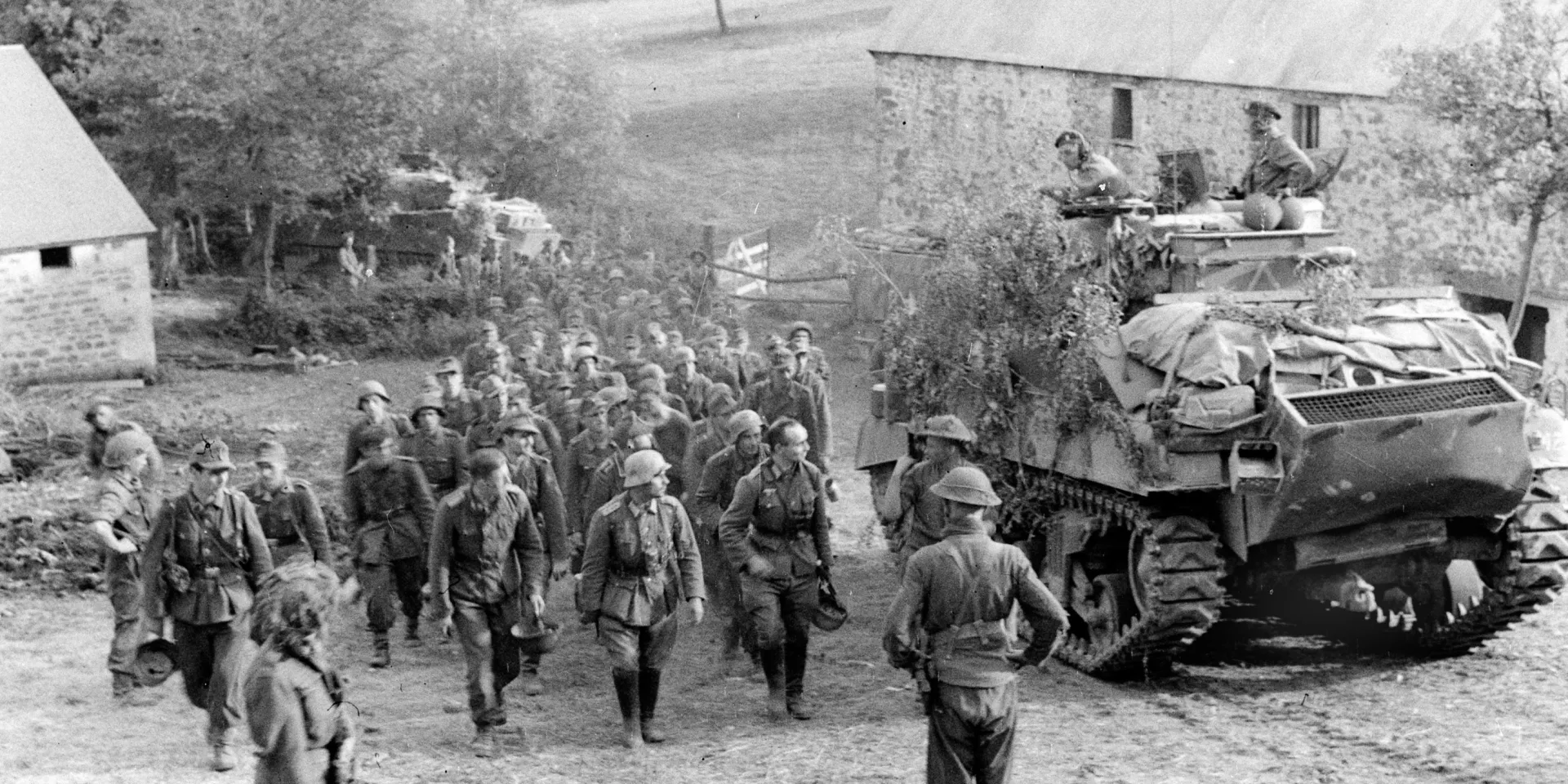
By late April 1944, Normandy was sealed tight under German control. Roadblocks dotted the countryside. Patrols were constant. Wireless detection units hunted radio signals with ruthless efficiency. Capture was not a possibility—it was an expectation.
And yet, intelligence was desperately needed.
Someone had to go back.
A Calculation Born of Desperation
British intelligence reached an uncomfortable conclusion: the problem wasn’t just the mission—it was the messengers.
Male agents stood out. They moved differently. They spoke differently. They were suspected quickly and hunted relentlessly. German forces had become adept at identifying and eliminating them.
So planners made a decision that would change the course of the war.
They would send someone the enemy would never fear.
A woman.
And not just any woman—someone who could vanish in plain sight.
Rebuilt for the Impossible
For months, she trained in the Scottish Highlands under the auspices of Britain’s shadow war organization, the Special Operations Executive.
Her preparation was brutal and exhaustive.
She learned wireless radio operation until her fingers moved automatically, even under extreme fatigue. Morse code was drilled relentlessly. She trained in weapons handling, unarmed combat, silent movement, and evasion. She was subjected to mock interrogations designed to break her psychologically before the enemy ever could.
One instructor—a former professional burglar—taught her how to climb walls, slip through windows, and disappear into darkness without sound.
This was not romantic training. It was survival education.
And for her, the war was already personal. Someone close to her family had been killed by the Nazis. The enemy was not theoretical. It had a face.
Becoming Invisible
Her cover story was as ingenious as it was dangerous.
She would pose as a teenage French farm girl.
Poor.
Uneducated.
Naive.
Harmless.
She was given worn clothing and taught to behave younger than her years—to giggle, ask foolish questions, and project innocence. The goal was not deception through strength, but deception through dismissal.
The men before her had died because they looked dangerous.
She would live by looking forgettable.
The Jump
On May 1, 1944, the door of an Allied bomber opened over occupied Normandy.
Cold air rushed into the aircraft as fields, hedgerows, villages, and forests spread out below—beautiful, familiar, and deadly.
She stepped forward.
Within hours of landing, she buried her parachute and British clothing, eliminating any evidence of her arrival. By morning, she had stepped fully into her new identity.
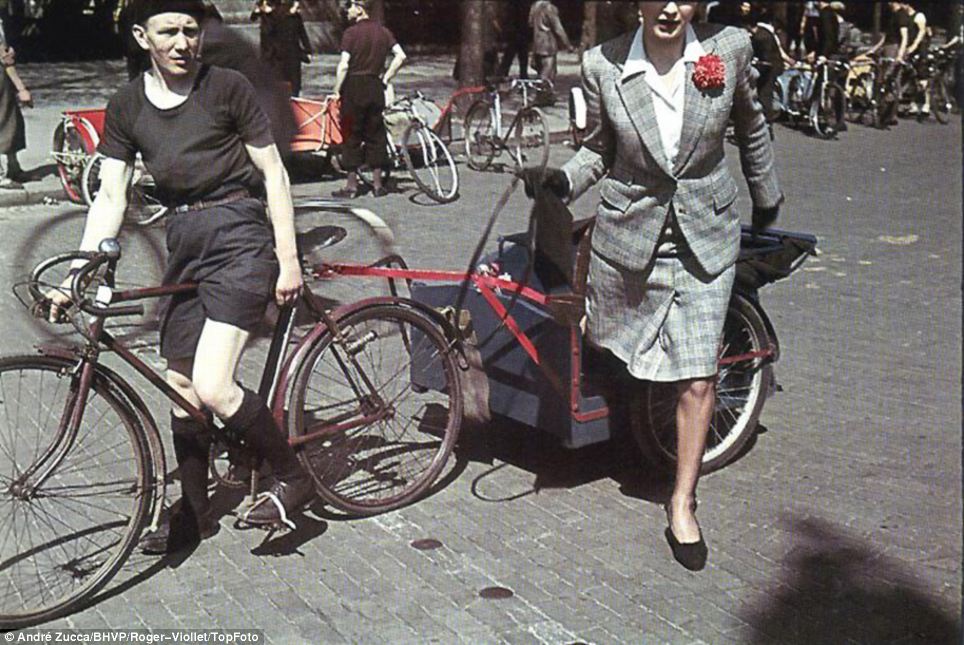
She was just another girl on a bicycle.
Life in Plain Sight
By day, she pedaled through the countryside selling soap.
It was the perfect disguise.
Soap provided an excuse to travel. It opened conversations. It invited trust. At German checkpoints, she smiled up at soldiers, complimented uniforms, asked childish questions, and appeared impressed by authority.
They laughed at her.
And while they laughed, she memorized everything.
Troop movements.
Road usage.
Equipment concentrations.
Defensive positions.
Every casual interaction was intelligence gathering. Every mile revealed patterns the enemy never realized they were sharing.
Then she disappeared again.
The Night Work
By night, she became something else entirely.
In barns, abandoned buildings, forests, and haylofts, she assembled a wireless radio and transmitted coded messages to London. German signal-tracking units could triangulate a broadcast in minutes, so she never stayed in one place. After each transmission, she moved on.
She slept outdoors. In fields. In woods. Hunger was constant. So was fear.
Her codes were written on silk—lightweight, silent, and easy to conceal. After each message, she pierced the silk with a pin so that no code sequence would ever be reused. The silk was hidden inside her hair ribbon.
Once, German soldiers stopped her at a checkpoint and searched her belongings thoroughly.
Then one of them pointed to her hair.
The ribbon.
“Show me that.”
Without hesitation, she untied it. Her hair fell loose around her shoulders as she smiled and handed over the silk containing every secret she carried.
The soldier glanced at it.
And waved her through.
Four Months Behind Enemy Lines
For nearly four months, she lived this double life—cycling by day, transmitting by night, never staying long enough to be found.
During that time, she sent 135 coded messages back to London—more than any other female Allied agent operating in France.
Those messages guided Allied bombing raids, informed strategic decisions, and helped prepare the ground for what was coming.
They helped make D-Day possible.
On June 6, 1944, Allied forces landed on the beaches of Normandy. Within weeks, the German occupation of France began to collapse.
Her mission ended quietly.
And so did her wartime identity.
The Reveal
Only later did history put a name to the girl on the bicycle.
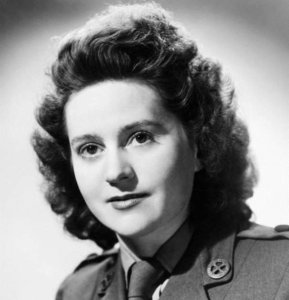
She was Phyllis Latour Doyle—one of the most successful wireless operators deployed by the Special Operations Executive during World War II.
After the war, she chose anonymity.
She married. Moved to New Zealand. Raised four children. Spoke little about what she had done. Even her family knew only fragments of the truth.
It wasn’t until decades later—around the year 2000—that her eldest son discovered her wartime role through historical records. When he asked her, she confirmed it simply.
Yes.
She had been a spy.
Yes.
She had jumped into France.
Yes.
She had sent the messages.
To her, it was just what needed to be done.
In 2014, on the 70th anniversary of D-Day, France awarded her the Légion d’honneur for her role in liberation. She accepted the honor quietly, as she had lived.
Phyllis Latour Doyle died on October 7, 2023, at the age of 102.
She outlived the regime that hunted her by nearly eighty years.
The Smallest Choices
World War II is often remembered through massive armies, famous generals, and decisive battles.
But history also turns on quieter moments.
On a decision to send someone unexpected.
On a ribbon hiding silk.
On a girl riding a bicycle through enemy lines.
Sometimes the greatest twists of fate arrive unnoticed.
Sources
-
Imperial War Museums – Phyllis Latour Doyle (SOE Agent)
-
BBC News – Obituary and D-Day anniversary coverage
-
National Archives (UK) – SOE personnel records
-
The Telegraph – WWII female spies and wireless operators
-
French Ministry of Defense – Légion d’honneur recipients
🔗 Explore more stories at ClarkVOServices.com